
Niven Ring World
“The Ringworld is Unstable!”
– MIT Students 1971
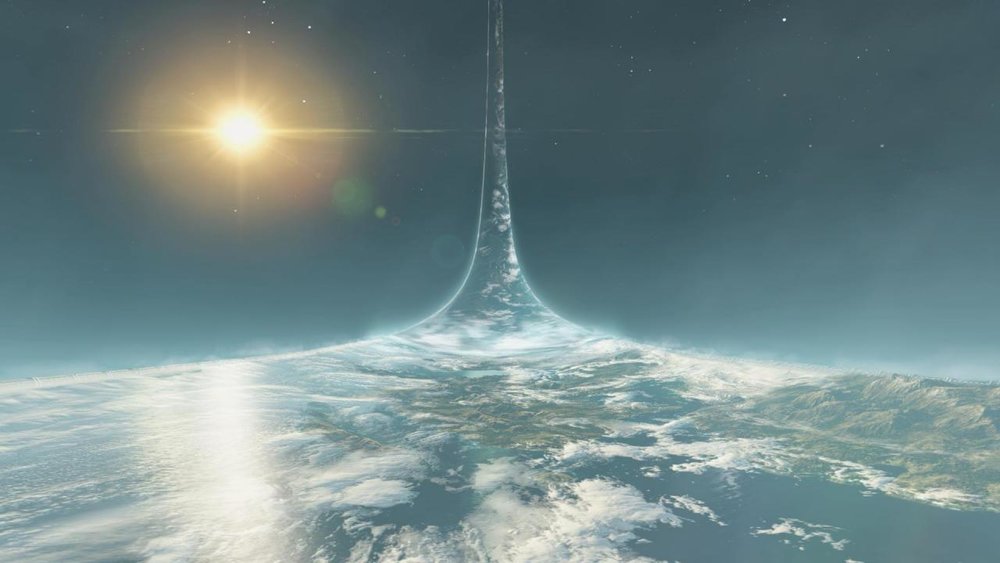
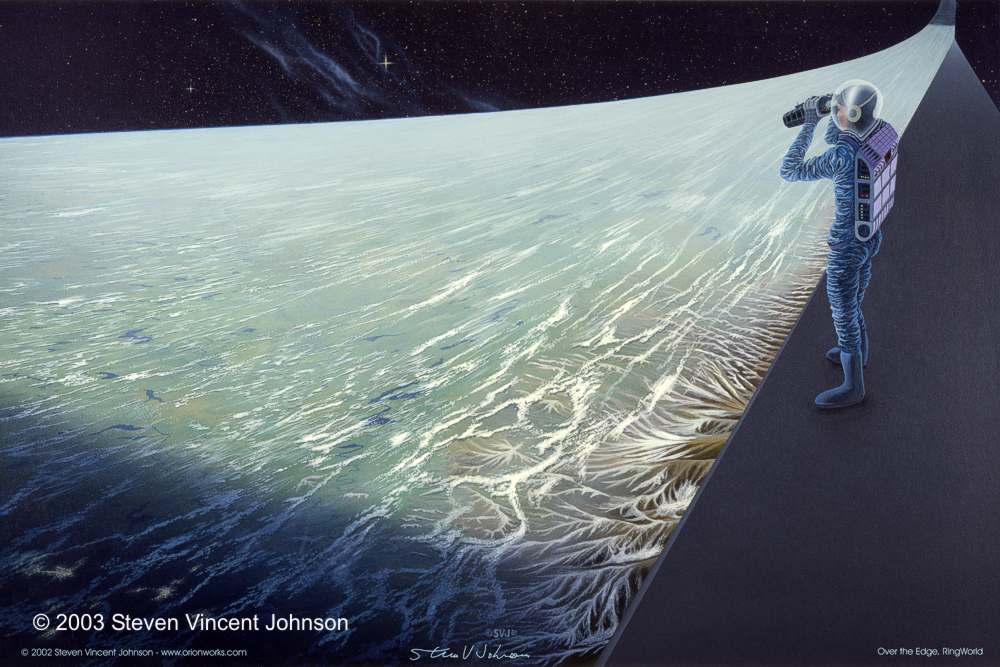
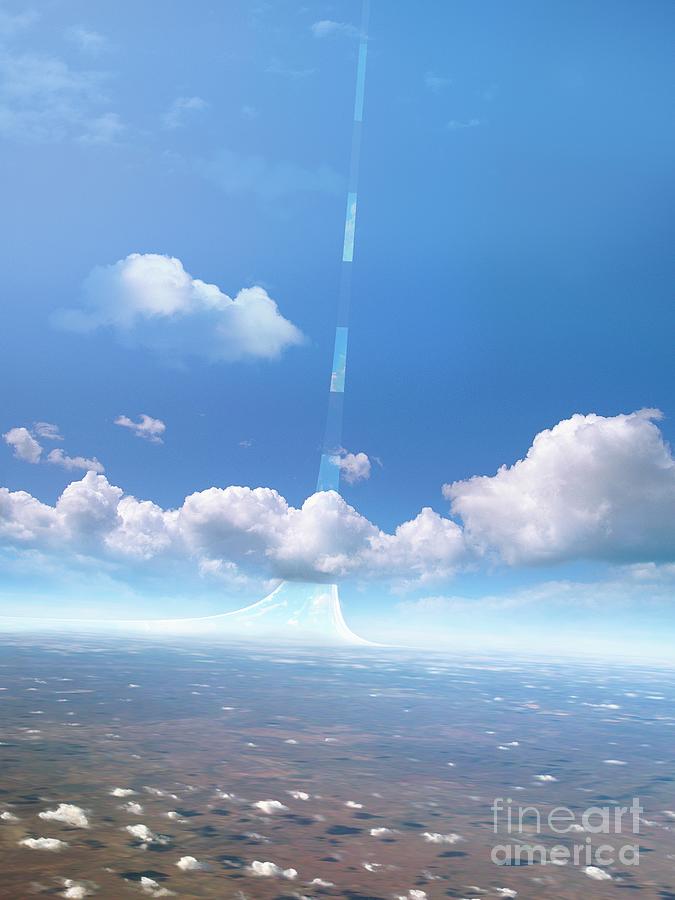
Popularized in Niven’s 1970 book Ringworld, the Ringworld is an artificial ring of habitable surface. It averages 1AU in radius, and has been refered to as a ‘slice’ of a Dyson Sphere. Using centrifugal force, it generates 1G of artificial gravity at the surface. Atmosphere is held in by tall edge walls.
At the center of a Ringworld is an orange dwarf star, giving earth like habitable zones. A ring of rectangular shades orbit farther out from the star, giving day-night cycles to the habitable zone.
The Ringworld model is unstable in several ways. First, to maintain an orbit around the sun, active stabilization is required. Large thrusters are spaced on the outer ring to keep the orbit centered. Secondly, erosion must be maintained. Waste is pumped up walls to spill mountains. This creates a ring of mountains around the wall edges hundred’s of kilometers high.
Foundation material for the ring in Niven’s Ringworld is Scrith. Scrith is a fictional, near indestructible metal-like material with extremally high tensile strength. It also absorbs most radiation & neutrinos.
Niven Model – Statistics
| Circumference: 942,480,000km | |
| Width: 2km | |
| Livable Area: 1.180 Quadrillion km | |
| Wall Hight: 1,610km | |
| Gravity: 1G |

Ring Floor Breakdown
- Topsoil: 10-20m
- Bedrock: 10-20m
- Structure:
- Scrith: 30-40m
- Foamed Scrith: 350m-1000m
- Material must be made of super strong bonds


 BOOTSTRAP PROTOCOL